|
|
|
|
 |
|
German-Vietnamese Technical Cooperation
Sustainable Management of Natural Resources
in Central Vietnam
|
|
Project Implementation is terminated on 31 March 2010
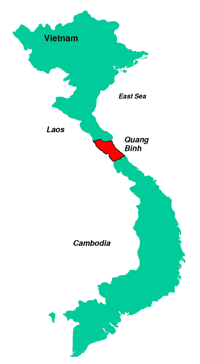
From 1996 to 2002, a predecessor pilot project on food security was implemented with support from GTZ in the mountainous districts of Quang Binh as one of the poorest provinces of Central Vietnam. The project succeeded in ensuring food security for the rural population and in cutting the rate of child malnutrition by half.
Since 2004, in order to consolidate and disseminate the pilot solutions beyond the core of the project region, GTZ has been supporting the follow-up project Sustainable Management of Natural Resources in Central Vietnam for a duration of six years. GFA Consulting Group is commissioned with the implementation of the German contribution. The Vietnamese project owner is the People’s Committee of Quang Binh province.
The project aims at contributing to a significant improvement of the living conditions of the population in the mountainous parts of the project region, while at the same time stabilizing ecological conditions. This is to be achieved by enabling the stakeholders in the project region (target groups, state and non-state service providers in rural areas) to manage their natural resources in a sustainable way.
|
|
The implementation of the project is
organized in major work areas, namely
- Participatory Socio-economic
Development Planning
- Participatory Agricultural Extension
- Value Chain and Cluster Promotion
- Community Forestry
|
|
|
During its first phase (April 2004 – March 2007), the project developed and successfully tested innovative methods and models in all work areas. In a first round of pilot implementation of these models, partners in the public and private sectors were trained and supported, and the target groups (rural households and small enterprises) have started to adopt the innovations. In the final implementation phase (April 2007 – March 2010), the challenge has been the institutionalization of these innovations; i.e. the integration of the new methods into the regular procedures of the relevant line departments and their application by the target groups on a scale that covers all rural communes in the project area (roll-out). As measured by the fulfilment of its impact indicators, the project is coming close to achieving its targets in all working areas. A remaining challenge for the final year is the systematic documentation of achievements and lessons learnt to share the implementation experience with other organizations and projects in Quang Binh and well beyond the project area. The present newly designed website is meant as a contribution to this end.
|
|
|
|
|