As Russia’s full-scale war against Ukraine continues into its fifth year, the toll on humans, communities and essential infrastructure remains severe. Continued attacks and disruption make daily life uncertain and place growing pressure on the services people depend on. For GFA, the commitment we made in 2022 remains firm: We stand with Ukraine and its people, supporting the country’s recovery today while helping lay the foundations for tomorrow.
Recovery cannot wait for the war to end. Across Ukraine, our colleagues and partners continue working under exceptionally difficult conditions to maintain essential services, strengthen institutions and prepare investments. Their expertise, dedication, and adaptability are crucial to this work. We deeply value their contributions and the trust placed in us by the Ukrainian institutions and communities with which we work.
This newsletter shows the extent of that shared effort. Our health teams are helping bring mental health support and care for non-communicable diseases closer to communities. Our infrastructure specialists are supporting the preparation of investments in water, energy, transport, and other essential services. In addition, our work on recovery financing and the rule of law supports the institutions Ukraine needs to manage resources transparently and advance towards EU membership.
These areas of work are closely connected to the overall reconstruction efforts. By pooling expertise across GFA, we aim to support Ukrainian partners in addressing these priorities. That means listening carefully, responding to changing needs and ensuring that our assistance strengthens local skills and institutions. The challenges remain immense, but our commitment to Ukraine’s recovery and reconstruction stands. We will continue working alongside our colleagues, Ukrainian partners, and international donors to help build a resilient future shaped by Ukraine and its people.
I wish you an inspiring read.
GFA supports Ukraine at country and international levels
Dr Victoria Jennett is responsible for GFA’s governance projects in Ukraine and Europe. A lawyer by training, with a PhD in constitutional law and conflict transformation, she has more than 15 years’ experience working with multilateral and bilateral governmental organisations and NGOs. In this interview, Victoria provides an overview of GFA’s work in Ukraine and her takeaways from international discussions.
GFA: In addition to GFA’s involvement in projects, you also take part in high-level conferences on Ukraine’s recovery. What do you learn from these exchanges, and how does that inform your work at GFA?
Victoria Jennett: The last Ukraine Recovery Conference was held in Gdańsk, Poland, and GFA attended because several of the donors we work with were there presenting their projects and commitments. These conferences provide an important opportunity for us to meet Ukrainian counterparts directly and hear from them about their needs, the bottlenecks they are facing, and the projects they are planning. We also meet donors and policy leaders on Ukraine. I also recently attended a conference on public integrity and peace in Belfast, Northern Ireland, where I grew up, organised by the Irish government and Transparency International. The discussions there had direct parallels with our work in Ukraine: How do we organise public institutions to ensure a fair distribution of resources, strengthen transparency, and prevent corruption, waste, and fraud? These discussions help us better understand the areas in which Ukraine will benefit from expert support going forward. They are also closely linked to Ukraine’s EU accession process, particularly Chapters 23 and 24, which focus on strengthening the rule of law and the institutions that underpin it. More than ever, especially in the age of AI, I’m convinced that our work ultimately comes down to people and trusted relationships. Getting out, meeting and listening to the people we want to support through our expertise, as well as the partners we want to work with and the governments and international institutions that fund our efforts, is one of the most effective ways to understand real needs, build trust, and develop projects that are truly successful.
How is GFA involved in German support for Ukraine’s reconstruction and recovery?
Victoria: As a Germany-based company, GFA follows very closely what the German government is doing in Ukraine. I recently attended a meeting of the German construction industry in the Bundestag with German members of parliament, state secretaries, and representatives of engineering and construction companies, including us. The GFA GROUP includes an engineering company, GKW Consult. GFA’s current projects in Ukraine support the governance systems in these sectors, for example, by helping improve procurement procedures in Ukraine in line with European standards and strengthen the management and oversight of financial flows. The German government has developed a support package for German companies seeking to work in Ukraine. This includes measures such as export credits and war-risk insurance, which help reduce the risks associated with investing there. At the same time, many Ukrainian companies are ready and willing to partner with German companies, creating significant potential for cooperation in Ukraine’s recovery and reconstruction.
Looking back at 2026, what stands out to you about GFA's work in Ukraine?
Victoria: I would say the work is becoming increasingly specific, targeted, and strategic. Early on, the focus was on responding to the immediate needs created by the war. Now, we are seeing much more demand for very specific expertise linked to Ukraine’s EU accession pathway and the longer-term strengthening of institutions. You see that in our KfW project, our rule of law work, as well as JASPERS and the EIB PMS. These projects bring together Ukrainian, European, and international expertise to help build strong institutions and, importantly, prepare Ukrainian partners to meet the requirements of EU accession and manage EU funds effectively. We are also seeing a growing pipeline of projects. For example, we are working with the Ministry of Finance on recovery finance, while also supporting the Ministry in preparing for EU accession and the management of EU funds. GFA is also working with the Ministry of Health to align national legislation with EU standards. At the same time, many of these projects have had to adapt since the beginning of the war, for example, addressing trauma, psychosocial needs, and other consequences of living through war. So, overall, I would say GFA’s work is evolving from primarily responding to immediate needs toward helping Ukraine build the institutional capacity it needs for recovery, resilience, and ultimately EU accession.
Almost five years after the invasion of Ukraine, how has the ongoing war affected GFA’s work in the country?
Victoria: One of the major challenges is the security of both our national and international staff. The security situation in Ukraine remains acute, and a number of donors have temporarily paused business travel, which is something that will need to be reviewed continuously as the situation evolves. At the same time, we at GFA have shown that we can remain effective and deliver our expertise remotely when our international experts cannot travel to Ukraine. But we should not underestimate the reality for our colleagues and beneficiaries who are living and working in Ukraine. They are operating under extreme stress and disruption to their daily lives, and that has a very real impact on how projects are implemented and how people are able to work.
Looking ahead, where do you see GFA’s role in supporting Ukraine’s reconstruction?
Victoria: We want to be a deep and lasting part of Ukraine’s reconstruction and recovery. Personally, I would like to see GFA have an even stronger presence in Ukraine, with a bigger team and an even closer connection to our Ukrainian partners. So much of our work is about building trusted relationships, understanding needs on the ground, and being able to respond quickly and effectively, and that is best done by being present. Over the next one to five years, I would like to see GFA expanding its presence and contributing to an even broader range of projects, particularly around EU accession and institutional development, but also across the many challenges Ukraine is facing today and will face in the years ahead. And I would like to see that growth is led increasingly by the wonderful Ukrainian colleagues we are already working with. Ultimately, I hope we can build a strong, Ukrainian-led GFA presence that can contribute to Ukraine’s recovery now and, when peace comes, to the country’s longer-term development and European future.
Building the institutions behind Ukraines´s recovery finance
Ukraine’s recovery needs more than financing. It needs strong institutions that can direct resources transparently, efficiently and towards measurable results. To this end, GFA Consulting Group supports the project Strengthening the Development Landscape and Reconstruction Financing in Ukraine. The GFA team assists the Ministry of Finance (MoF) and the National Deproject Strengthening the Development Landscape and Reconstruction Financing in Ukrainevelopment Institution (NDI) in improving institutional development, digitalisation, transparency, and impact-oriented reporting towards a solid recovery financing architecture.
The project is financed by the German Federal Ministry of Finance (BMF) through the KfW Development Bank and focuses on two closely linked components that connect the Ministry's coordination and oversight role with NDI’s implementation of financial support programmes.
Component 1 - MoF: Strengthening coordination and public financial management. At the MoF, support aims at fostering the management of recovery resources and coordination of national and international development finance, while advancing alignment with EU accession requirements. This includes improving internal processes and financial monitoring, supporting sustainability reporting based on European Sustainability Reporting Standards (ESRS), and developing tools to assess the impact of financial support programmes.
Component 2 - NDI: Modernising NDI and measuring results. At the NDI, the project strives at institutional upgrading through digitised workflows, secure information systems and more efficient cooperation with financial partner institutions and the MoF. Monitoring and impact assessment tools, aligned across both components, will help evaluate NDI’s support programmes and inform their future design, with a particular focus on financing for small and medium-sized enterprises.
Building lasting institutional capacity: GFA’s assistance combines institutional and technical advice with practical tools, capacity development and knowledge transfer. The focus is not simply on producing strategies and procedures, but on aiding partner institutions build the systems and skills needed to apply them in their day-to-day work. Gender equality, inclusion, conflict sensitivity and institutional sustainability are integrated across the project. Cooperation with other development partners will also help ensure that support complements existing initiatives and contributes to a coherent approach.
At its core, the project is about strengthening the institutions behind the financing. By supporting the MoF and NDI, GFA aims at translating development and reconstruction funds into transparent, well-managed and impactful support for Ukraine’s economic recovery, long-term resilience and European integration.
GFA Consulting Group is supporting Ukraine’s recovery through complementary assignments: the EU4U Programme Management Support (PMS) and JASPERS On-Site Consultancy for Institutional Strengthening in Ukraine (EU4U) of the European Investment Bank (EIB). Together, these projects support the preparation and implementation of investments, provide specialist expertise to the EIB, and strengthen Ukrainian institutions. In the interview, Ievgenii Cherviachenko delivers an insight into GFA’s practical work behind Ukraine’s recovery, how experts work alongside the EIB and Ukrainian institutions, and why local expertise, flexibility and a focus on tangible results are particularly important in Ukraine.
GFA: What is the JASPERS assignment in Ukraine?
Ievgenii Cherviachenko: JASPERS provides internal support to the EIB, primarily to its project engineers. The GFA team helps identify and assess potential projects, supports the appraisal process, and provides analysis and local knowledge. It also supports cooperation with Ukrainian authorities across a wide range of sectors. The work covers energy and municipal energy, water, housing, and transport, including municipal and national transport. More than nine experts are based at the EIB office in Kyiv, working closely with the Bank’s teams.
What does that work look like in practice?
Ievgenii: The experts contribute to project development and assessments in areas such as major road and railway connections with Europe, energy interconnections, social housing, and water infrastructure. The idea is to combine the EIB’s expertise with a strong understanding of Ukrainian realities. Ukraine has become a major portfolio for the bank, so having experts on the ground who understand the country and can work directly alongside EIB colleagues is particularly valuable.
What makes this different from a more conventional technical assistance project?
Ievgenii: We are effectively working inside the bank. The experts do not prepare a policy paper and then leave. They work alongside engineers, bankers, and lawyers as part of the process through which potential investments are identified, prepared, and appraised. That is quite distinctive. The work happens behind the scenes, but it is part of what enables infrastructure investments to move forward.
How does PMS differ from JASPERS?
Ievgenii: The two assignments complement each other, but their focus is different. JASPERS is primarily geared towards the engineering and project side of the EIB, while PMS provides broader programme management support, particularly for bankers and other EIB departments. PMS also has a stronger presence in Luxembourg, whereas the JASPERS team is based in EIB’s Ukrainian office. We collaborate whenever necessary because both assignments ultimately contribute to preparing investments and supporting EIB operations in Ukraine.
How does PMS work in practice?
Ievgenii: It is very demand-driven. When the EIB identifies a particular need, we mobilise the relevant expertise. We have had 49 task orders, with each task potentially involving one or more experts. Around 30 experts have been involved, depending on the assignments underway. Their expertise includes energy, healthcare investment, water, municipal development, social housing, and legal matters.
So, what is the overall role of PMS?
Ievgenii: Essentially, it assists the EIB with specific capacity and expertise needs as they arise. That can mean bringing in a specialist for a particular investment, preparing analysis or supporting other parts of the Bank’s work. What makes PMS interesting is that we are not working at arm’s length from the bank. We at GFA work directly with bankers, lawyers and other EIB specialists. Together with JASPERS, we are part of the investment preparation cycle.
Enhancing climate-resilient urban infrastructure projects in the water and wastewater sector
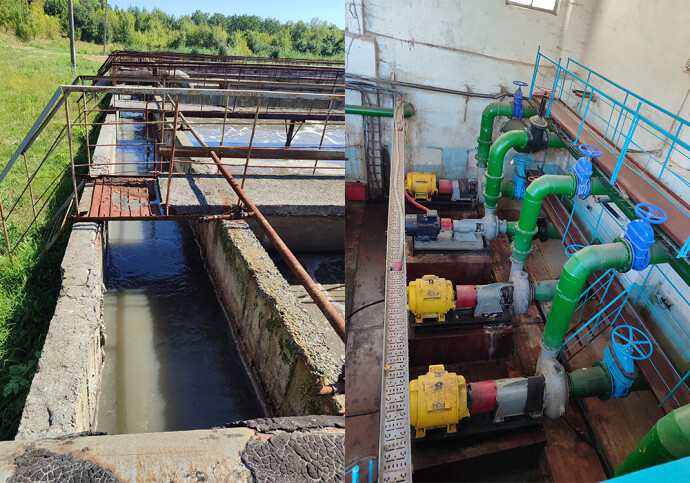
The Eastern Partnership and Central Asia Program (FELICITY II) emphasizes its regional significance and alignment with broader initiatives aimed at enhancing urban infrastructure and environmental sustainability. In this context, GFA aims at helping water utilities in Ukraine enhance their low-carbon, climate-resilient urban infrastructure projects in the water and wastewater sector, preparing them for funding.
The Program’s key objectives are to prepare project proposals, to support capacity development, and to document lessons learned. This is to boost energy efficiency awareness among policymakers in Eastern Europe and Central Asia. In Ukraine, the focus is on improving water services and security, reducing environmental pollution, and lowering greenhouse gas emissions, all critical for meeting EU standards.
For Project Manager Mariia Pavlova, the value of this technical assistance lies in what it makes possible. “Preparing the design documentation is the first and most critical step,” she says. “Without it, there is nothing to finance, tender or build.”
The need for such services is particularly significant in Ukraine, where water and wastewater infrastructure has been affected both by the war and by difficulties in maintaining existing facilities. As Pavlova explains: “Even where facilities have not been directly attacked, many are running on systems designed for a different country and a different era, and kept going for decades with too little investment. They now need major renovation, and in some cases entirely new construction.”
While design documentation may not provide immediately visible results of a completed infrastructure project, it lays the groundwork for future investment. As Pavlova puts it: “Nobody cuts a ribbon for a set of design documents. But without them, there is no new treatment plant, no new pipeline, no reliable water for the people living there.”
Looking ahead, the project is working towards a specific milestone. “By the end of the year, we aim to have the preparation work for all five subprojects well advanced, so that they can move towards financing and construction,” Pavlova says.
Together with the German Foundation for International Legal Cooperation (IRZ), GFA Consulting Group has been awarded a contract to provide expertise supporting Ukraine’s alignment with the European Union concerning the rule of law.
The assignment is part of 3E4U project (Strengthening Ukraine’s EU Alignment in the Rule of Law) and will support Ukrainian partners in the negotiation and implementation process related to Chapter 23 (Judiciary and Fundamental Rights) and Chapter 24 (Justice, Freedom and Security).
Both chapters belong to Cluster 1 “Fundamentals”, which plays a central role in the EU accession process. The cluster covers areas including judiciary and fundamental rights, justice, freedom and security, public administration reform, democratic institutions, public procurement, statistics and financial control. This work has become more important since the formal opening of Cluster 1 in Ukraine’s accession negotiations in June 2026. Rule of law is a cornerstone of the EU and a key element of accession, with progress in areas such as judicial reform, anti-corruption, and democratic institutions subject to continuous monitoring.
Under the assignment, GFA Consulting Group and IRZ will contribute specialist expertise to support Ukrainian institutions as they work towards meeting the requirements of Chapters 23 and 24. Progress under these chapters will be assessed against defined benchmarks, including the Interim Benchmark Assessment Report (IBAR). The broader reform process is intended to strengthen fundamental rights, the justice system and public institutions while creating more transparent and predictable conditions for citizens, businesses, investment, and reconstruction.
For GFA Consulting Group, the new assignment builds on its work supporting institutional reform, governance, and Ukraine’s European integration. Together with IRZ, GFA will bring relevant technical expertise to a reform process that is closely linked to Ukraine’s path towards EU membership.
The 3E4U project is commissioned by the German Federal Foreign Office and the European Union, and implemented by the Deutsche Gesellschaft für Internationale Zusammenarbeit (GIZ) in partnership with Ukrainian state bodies such as the Office of the Deputy Prime Minister for European and Euro-Atlantic Integration.
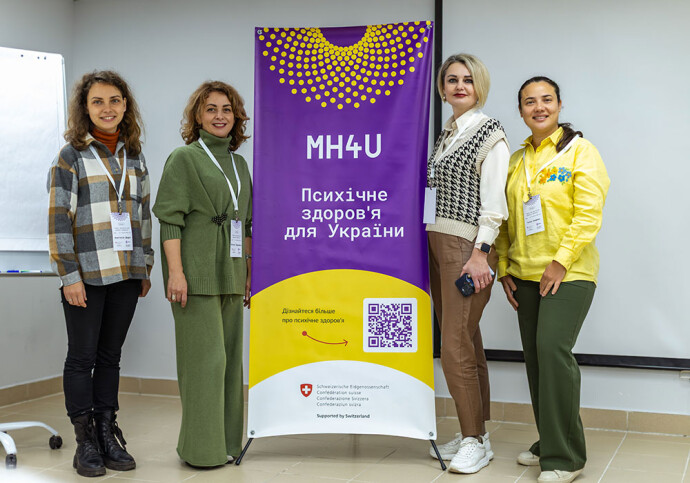
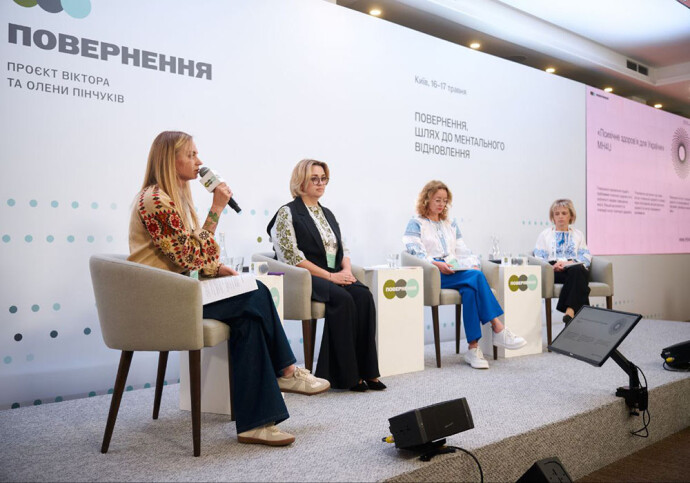
The MH4U project supported the Ministry of Health in Ukraine in implementing the mental health care reform initiated in 2017. It aimed at a system, where people with mental health and psychosocial problems could find help in their own city, village or neighbourhood with health care personnel, psychologists, social and educational staff working together.
Due to the full-scale war in Ukraine since 2022, and war in parts of the country since 2014, a new component was added to the project in which GFA mitigated the negative effects of the war on people’s mental health. This included programmes for resilience, for self-care, for what we call self-compassion. A lot of displaced people from war-affected territories move to other parts of Ukraine, which causes all kinds of integration and social problems. The GFA team of experts created social interventions to reconnect people, and train professionals in war-related mental health.
GFA also did construction and renovation of spaces to create new community-based mental health centres, where people can walk in and receive the care they need. In addition, the project team designed living places for people with disabilities who previously only had nursing homes as places to go. Now they can live in supported living houses, in groups of 10-15 people, with around the clock social assistants teaching everyday life skills.
The project, driven by team collaboration and funded by Swiss Development Cooperation (SDC) in 2019–2024, has been successful because of the way GFA empowered Ukrainian team members to take over responsibility and creativity in their work.
Preventing non-communicable diseases
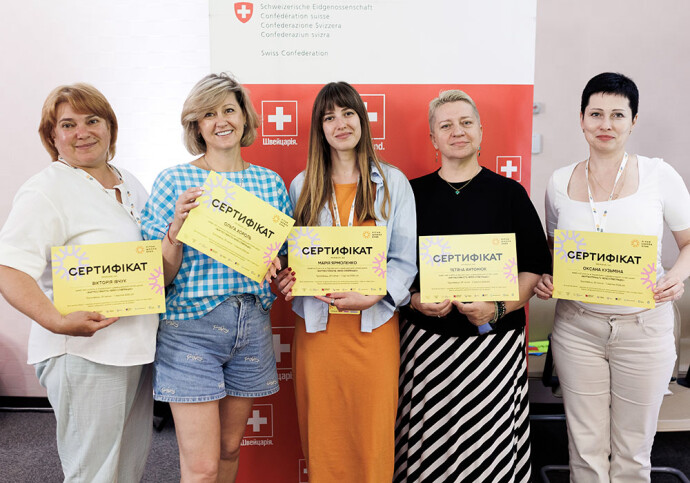
At its heart, Act4Health is about preventing non-communicable diseases (NCDs) by addressing risk factors promoting healthier lives, and building a stronger, more resilient healthcare system in Ukraine. Funded by SDC in 2020-2029 and implemented by GFA, the project’s focus lies on four major diseases: cardiovascular diseases, diabetes, cancer, and chronic obstructive pulmonary disease (COPD). These conditions place a significant burden on individuals, families, and the healthcare system, yet many of their risk factors are preventable.
The project’s first phase began in 2019 with the clear ambition to shift the focus from simply treating diseases to preventing them before they develop, while strengthening Ukraine’s capacity to provide effective, people-centred healthcare.
Initially, GFA work was structured around three pillars: strengthening NCD policies and public health interventions, improving the prevention and management of NCDs as part of primary healthcare, and promoting healthy behaviours through communication and community engagement.
When the full-scale war began in 2022, the needs of the population changed dramatically, and so did the GFA response. The project team introduced a fourth pillar focused on emergency healthcare, deploying mobile medical teams and home-based care teams to reach vulnerable populations, particularly those living in remote, hard-to-reach, and war-affected communities.
What makes the GFA approach particularly important is the work at multiple levels. Engaging directly with schools, communities, healthcare professionals, and public health institutions promotes healthier lifestyles, strengthens prevention, and safeguards sustainable changes becoming part of everyday life.
A major achievement has been the establishment of seven NCD knowledge hubs alongside the development of specialised training modules to strengthen the capacity of public health institutions. These hubs are helping build local expertise and create a foundation for long-term improvements in NCD prevention and management.
GFA experts have also contributed to strengthening the evidence base for public health decision-making in Ukraine. This includes supporting the Childhood Obesity Surveillance Initiative (COSI), conducting the country's first NCD cost-benefit analysis, and assessing gaps between health and social care services. The related research helps policymakers better understand where investments are most needed and how services can become more effective and integrated.
GFA’s ambition is simple but powerful: Helping Ukraine move towards a future where preventing disease is as important as treating it so that everyone has a better chance to live a longer, healthier life.
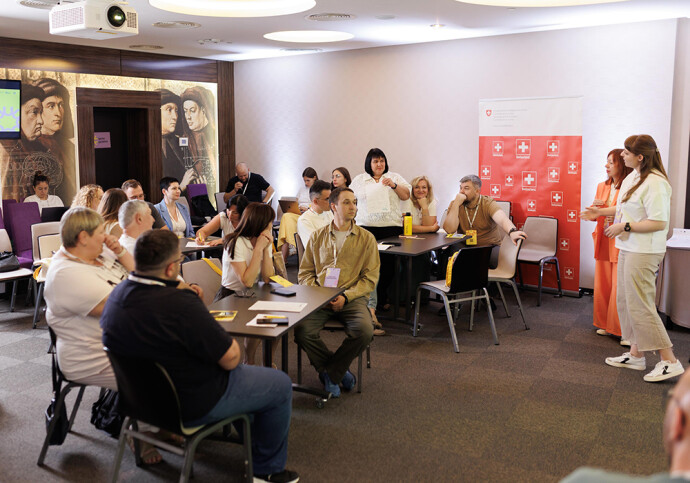
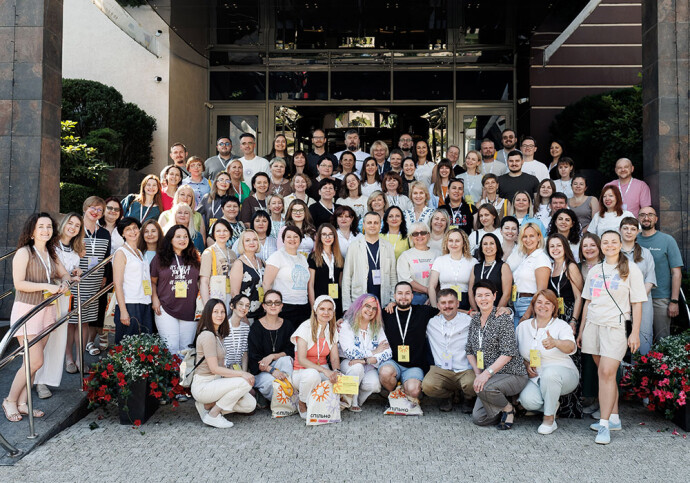
Participants proudly receive their certificates at the Summer School held as part of the SDC-funded Ukraine Act4Health Project, implemented by GFA Consulting Group and Geneva University Hospitals in partnership with OneHealth and Women’s Health and Family Planning