BEYOND THE SCREEN: DIGITAL LEARNING FOR REAL-WORLD IMPACT
Editorial
Anja Desai (Managing Director of GFA Consulting Group GmbH & GFA Holding AG)
This newsletter highlights a core competency that GFA Consulting Group has built over two decades: delivering training and learning for adults with lasting, sustainable impact. It has always been our guiding principle when designing and conducting training and learning events to measure success not by the number of training days delivered or participants reached, but by the quality of interaction and the learning outcome achieved.
Given the rapid advancement of IT and digitalisation worldwide, the question is no longer whether to use digital tools, but how to use them effectively to support adult learning. At GFA’s Digital Learning for Impact (DLI) unit, we focus on what happens beyond the screen. Digital learning is not an end in itself, but a practical tool for building skills and driving real change.
This means putting people at the centre of our work. Even the most advanced learning platforms fall short if they do not reflect the cultural, logistical, and everyday realities of the people using them. By combining GFA’s technical expertise with hands-on learning design, DLI develops solutions that are not only delivered but deeply understood, applied, and sustained in real-life contexts.
In this issue of the GFA newsletter, our colleagues on the DLI team present a selection of their recent projects and products. In our articles and videos, you can learn about our philosophy and how we approach the development of our tools and services. From supporting youth employability in Senegal to developing AI-enabled tools with global partners, our work is grounded in co-creation and practice-oriented application. We aim to translate digital potential into real-world competence for our participants.
Kind regards, Anja Desai
DESIGNING FOR TOMORROW: NAVIGATING THE FUTURE OF COMPETENCE
Learning and working environments are constantly changing, shaped by digital transformation, evolving labour markets, and global challenges. In this context, building future-ready skills goes beyond acquiring knowledge. It requires the ability to adapt, respond to uncertainty, and apply learning across different and often unpredictable situations.
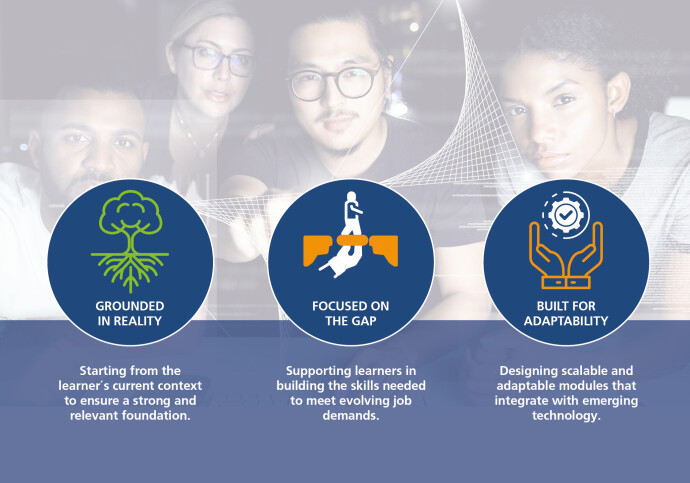
At the Digital Learning for Impact (DLI) unit of GFA Consulting Group, our learning design reflects these shifts. Rather than focusing on abstract knowledge transfer, our approach centres on creating practical, context-driven learning experiences that reflect how people actually work and learn. We design content that bridges skill gaps and connects directly to learners’ working environments and real-life situations.
Key elements of this approach are relevance and practical application. We tailor learning solutions to specific contexts so that learners not only understand skills and knowledge, but can also apply them in their daily work. By embedding learning within realistic scenarios, participants are supported in recognising when and how to use what they have learned, strengthening both their confidence and capability.
Another core principle is flexibility. DLI’s learning experiences are designed to work across different settings, including low-connectivity and fully offline environments. This helps ensure that access to learning is not constrained by infrastructure and that individuals can continue to develop their skills regardless of their circumstances.
The focus on knowledge transfer also extends to the structure of learning itself. Rather than one-off training, DLI promotes continuous learning that encourages reflection, adaptation, and ongoing development – helping individuals navigate complexity over time, rather than simply responding to immediate challenges.
Ultimately, DLI’s approach goes beyond skill acquisition. It enables learners to engage with change, make informed decisions in dynamic contexts, and apply their knowledge in ways that generate practical, lasting impact in their working environments.
Our approach to learning design also guides how DLI selects digital formats and tools – choosing them only where they add clear value to the learning experience. Depending on the context, this may include video-based learning, AI-supported guidance, or interactive platforms that make learning more accessible, engaging, and adaptable across different settings.
Youth employability in West Africa is significantly shaped by skill gaps, including in entrepreneurial and digital competencies. Connectivity constraints, low-data access, and other everyday conditions limit how learning can be delivered. This calls for solutions that work in low-resource digital environments while delivering contextualised, engaging content.
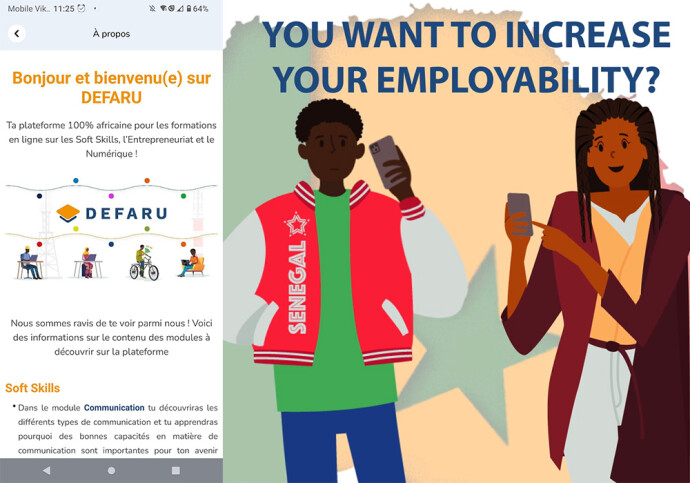
GFA’s challenge was to design an African solution that operates within these constraints, and helps learners understand not just how, but why and when to apply essential skills in career orientation, job search preparation, and workplace integration. As a core objective was that users be able to access free training at their own pace and place, the ability to learn offline became a defining feature of DEFARU – a free, self-paced online learning platform focused on improving employability, career development, and entrepreneurial skills.
Within a GIZ-implemented project (2021–2025) in Senegal, the GFA DLI unit co-created a mobile-first, MOOC-style (Massive Open Online Course) e-learning programme – designed for a large number of participants – to overcome real-life constraints. Beyond reducing data usage and enabling offline access, the programme integrates relatable storytelling, practical scenarios, and examples based on the local situation – fostering deeper engagement and supporting the development of transversal skills through high-fidelity and low-friction learning.
DEFARU modules are designed for young people who are familiar with digital devices and apps such as social media and messaging services, but lack experience in using them for professional purposes. To make the learning experience engaging and relatable, the modules introduce four personas, each reflecting real-life circumstances that young professionals may face. These personas navigate everyday work scenarios that highlight the importance of digital soft skills in the workplace. This approach is based on insights from focus group discussions with DEFARU users and findings from a recent GFA study conducted on behalf of GIZ. The results were striking: more than 8,000 active learners took part and around 2,000 certificates were issued.
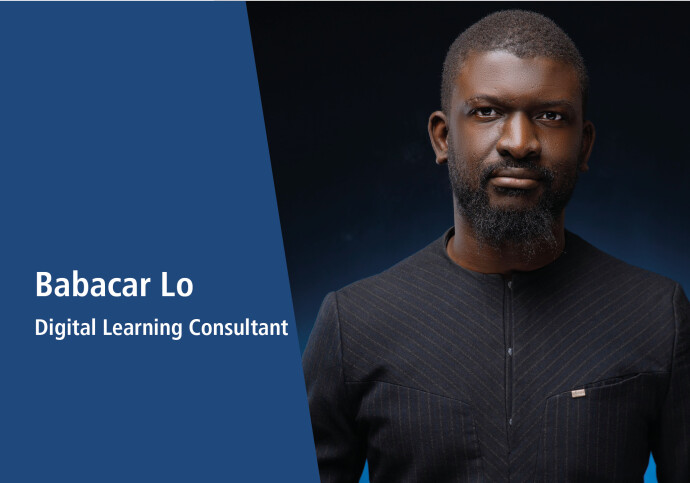
With a rollout across urban and rural Senegal, Côte d’Ivoire, and beyond, the GFA team achieved extensive regional reach. Ultimately, DEFARU delivered on its objective of improving employability through accessible, cross-cutting skills development. Babacar Lo of the GFA DLI team will present the DEFARU story at the eLearning Africa Conference in Accra, Ghana on 3–5 June 2026.
It's a valuable opportunity to carry the voice of DEFARU – a wonderful e-learning project – together with the GFA West Africa HUB and Volkeno – and to learn alongside fellow digital education enthusiasts from across #Africa. I'll be coming above all to listen, to exchange, and to humbly share what our local realities teach us every day. Thank you, GFA Consulting Group GmbH, for your continued trust. See you in June.
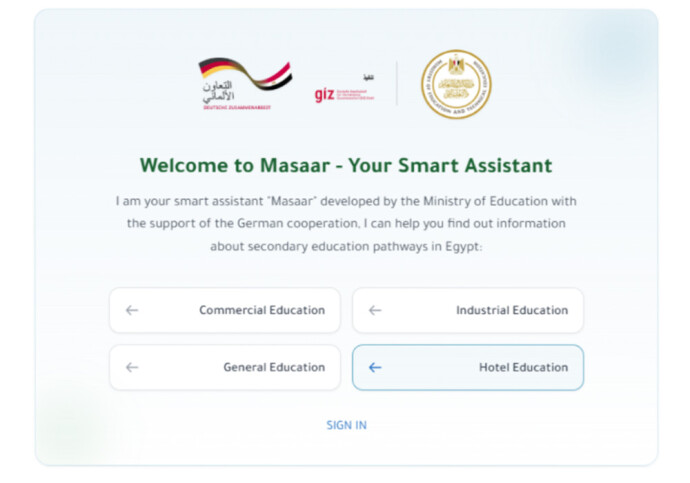
In Egypt, there is growing interest in providing individual learners and families with more personalised, accessible career guidance. This includes a better understanding of education and career pathways – such as technical and vocational education and training (TVET) – as well as opportunities in emerging sectors like the green economy.
To meet this demand, GFA’s Digital Learning for Impact (DLI) unit developed an innovative, conversational Career Guide AI Tutor – available in Arabic and English – to translate complex labour market insights into accessible, personalised recommendations aligned with regional contexts, educational programme provisions, and national policy objectives.
Acting as a 24/7 digital companion, the Career Guide AI Tutor offers practice-oriented advice and tailored recommendations. In a typical interaction, a user who has just finished secondary school and is interested in environmentally friendly career options might ask for guidance. The tool responds by highlighting the growing demand for green jobs and suggesting relevant TVET pathways in Egypt – such as solar energy installation, sustainable agriculture, or water management. It then provides concrete examples of available training programmes, explains their typical duration, and outlines potential employment options. The Career Guide AI Tutor also helps users identify nearby technical schools, helping them turn initial interest into practical, actionable decisions.
GFA’s approach focuses on building trust and enabling adoption. Beyond the technology itself, the 2024–2028 project in Egypt, implemented by GIZ, reflects this through a strong emphasis on trust, alignment, and sustainability. DLI has played a key role in demonstrating the value of the Career Guide AI Tutor to partners and ensuring that the solution is fully compliant with data protection standards, such as the European Union’s General Data Protection Regulation (GDPR).
At the same time, DLI remains closely aligned with the ambitions of Egypt’s TVET 2.0 reform. Operating in a complex and politically sensitive environment, it has also acted as a connector between stakeholders, carefully navigating institutional priorities and expectations. The project began with a platform-based prototype to test and validate the concept. Building on the lessons learned, in-house development is currently under way with a national expert to create a new pilot – one that can be seamlessly integrated into the existing digital infrastructure of the Ministry of Education and Technical Education, ensuring long-term ownership and scalability.
The Green School is a professional development programme that equips practitioners with the skills and insights needed to navigate the shifting demands of the Just Energy Transition. The challenge lies in aligning theory with the practical demands of this transition.
The Just Energy Transition refers to a shift towards a climate-neutral, renewable-powered economy that is socially equitable. It goes beyond technology to address employment, social protection, and poverty. Key components include the retraining of fossil fuel workers, the diversification of regional economies, and the provision of affordable energy. However, capacity building is currently struggling to keep pace with the complexity of this transition. Existing programmes are often too abstract, leaving professionals without the concrete tools needed to translate climate goals into practice.
In response to this gap, the Green School offers a more practical approach to capacity building. This self-paced online course equips professionals with the skills needed to advance the Just Energy Transition, translating complex transition goals into concrete, actionable tools. It also uses a custom AI-driven tutor to support learners in thinking through how green, digital, and gender-responsive approaches can be applied to their own work.
From learning to application
The Green School is designed as a flexible and practical learning journey that fits around busy professional schedules while staying closely connected to real-world challenges. Participants move through short, modular eLearning units that explore key topics related to green, digital, and gender-responsive transitions. The programme uses practical case studies that illustrate how these approaches work in context. In addition to the online component, participants can join live sessions with experts to address specific questions and explore relevant issues in greater depth.
What was especially important to us in designing the Green School was ensuring that participants are not left alone when it comes to applying what they learn. This is where the AI tutor comes in – it acts as a continuous sparring partner throughout the journey. Participants can test ideas, reflect on their plans, and receive immediate, tailored feedback that helps them sharpen and adapt their approaches. With this, we aim to create learning experiences where support is always available, and where translating knowledge into concrete action becomes a natural part of the process.
Joanne Schuiteman, consultant in the DLI team
Throughout the programme, collaboration plays an important role. Participants discuss their experiences, work together on assigned tasks and challenges, and learn from one another. Regular exercises, including the development of users’ own roadmaps, help ensure that newly acquired knowledge is applied directly to their day-to-day work. An AI tutor provides additional guidance through feedback and prompted reflection.
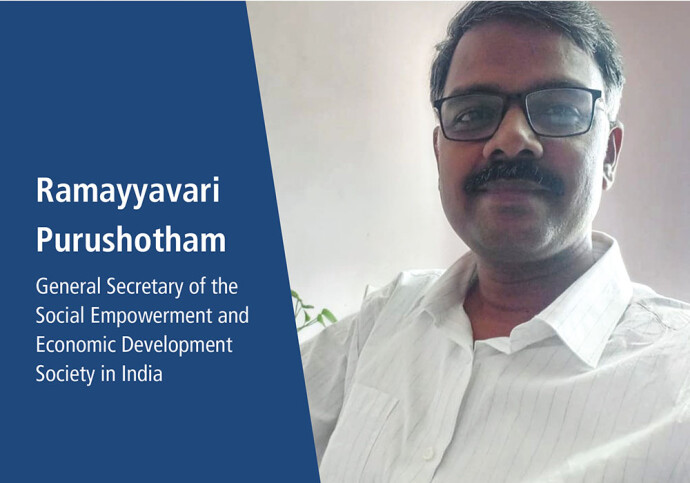
‘This course covered all sectors and sub-sectors of green energy with excellent examples’, said Ramayyavari Purushotham, General Secretary of the Social Empowerment and Economic Development Society in India. ‘It has significantly helped me in planning and implementing TVET education, and gave me the opportunity to interact with peers from various countries and learn about their practices.’
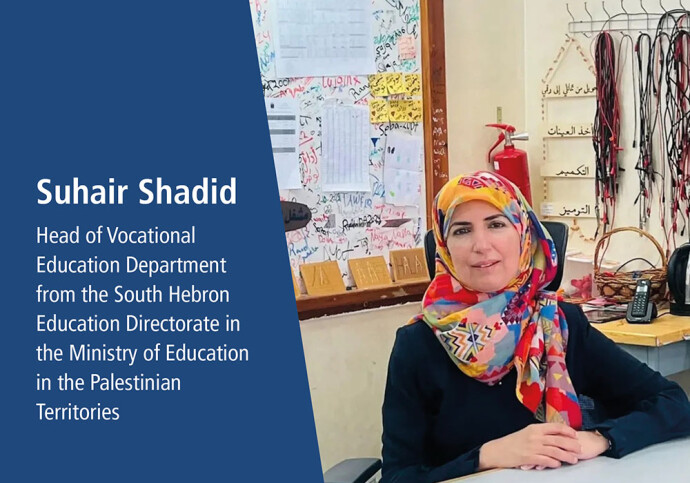
Suhair Shadid, Head of the Vocational Education Department at the South Hebron Education Directorate in the Ministry of Education in the Palestinian Territories, said: ‘The Green School AI tutor opened up new ideas for me. It didn’t just provide answers – it made me think differently. Sometimes I forgot which course a term came from, but the AI tutor helped me find it right away, without needing to search on other platforms.’
Overall, Green School participants find the course provides a learning experience that is not just informative but directly useful in practice, aligning theory with the concrete demands of the Just Energy Transition.
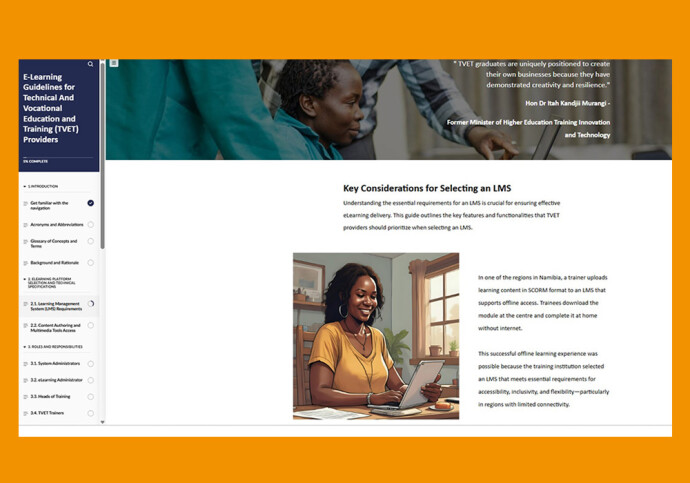
The digital toolkit is a powerful tool that supports TVET training providers in Namibia in designing and delivering eLearning courses. Originally drafted by the Namibia Training Authority (NTA), it translates national guidance into an interactive, accessible format that helps providers apply practical steps and standards in their own training contexts.
When we designed the Namibia eLearning Toolkit, our focus was on making the national guidance truly usable for TVET providers in their day-to-day work. Instead of lengthy documents, users can directly access practical tools. For example, a checklist on developing an eLearning course guides users through steps such as defining learning outcomes, selecting appropriate digital formats, ensuring learner engagement, and aligning with national quality standards. Each of these steps reflects common challenges providers face and helps ensure that courses are both effective and compliant.
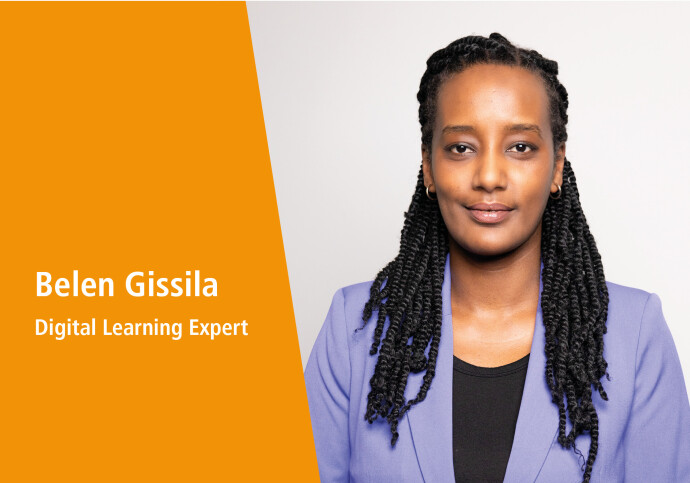
Belen Gissila, an expert in the DLI team
A navigation system based on use cases allows users to enter the toolkit from different starting points. For example, some may directly access practical tools such as checklists, while others may explore comprehensive thematic sections. ‘This flexibility ensures relevance for diverse user groups,’ Gissila adds.
The toolkit is developed iteratively, beginning with a demo module to validate structure, design, and functionality. Stakeholder feedback is gathered and integrated before development is scaled up in batches. Each module undergoes quality assurance checks, covering responsiveness, accessibility standards, and functional testing of links and resources. Some of the toolkit’s core features are outlined below.
The challenge: Static content vs. usability
Traditional document-based toolkits often limit usability as it is difficult for users to quickly find, navigate, and apply relevant information. Static formats also constrain updates and distribution, reducing their effectiveness in dynamic and fast-changing contexts.
The approach: Digital and user-centred design
The Digital Toolkit addresses these challenges by converting static content into a responsive, interactive format. Its modular structure allows users to access guidance tailored to their specific roles and needs. Interactive features – such as templates, checklists, and real-world examples – support practical application, while the digital format enables continuous updates and broad accessibility.
The process: From document to interactive tool
The transformation begins by restructuring the original content into clear thematic modules. An instructional designer works closely with subject matter experts to translate technical material into an intuitive, consistent learning flow. The toolkit is then developed using responsive technology that ensures access across desktop and mobile devices.
The final product can be integrated into a learning management system or embedded in a website, with optional offline access. Drawing on prior experience, including the Namibia eLearning Toolkit for TVET institutions, this approach delivers a scalable, adaptable, and practical solution that helps users apply their knowledge effectively.
This year’s meeting of the managing directors of the GFA GROUP companies
Read the latest news about the activities of GFA GROUP and its member companies.
Change within GFA leadership: Christian Dürr takes over from Heiko Weißleder
In April, Christian Dürr joined the management team of GFA Consulting Group GmbH and its parent organisation, GFA Holding AG. The qualified business economist is now gradually taking over the areas of responsibility previously held by long-standing Financial Managing Director Dr Heiko Weißleder, who is leaving GFA at the end of June. Dürr will then head GFA together with Managing Directors Dr Ilona Schadl and Anja Desai.
GFA GROUP Management meeting: Two days, many perspectives – and a shared goal
The first day of this year’s management meeting was entirely devoted to the big picture: “Where do we stand as a group of companies? What changes are currently shaping our environment – and what does that mean in concrete terms for our work?” In an open discussion on strategic initiatives, market trends and new requirements, it became clear: the challenges in the field of international cooperation are growing.