For GFA, fragile contexts are not an abstract development category. We have the women in Burkina Faso’s Centre-Nord region in mind who live in communities cut off by insecurity. We picture the people of Mykolaiv whose water system was destroyed by shelling. We are engaged with communities in Yemen, in the DRC, in Northern Nigeria - places where the basics of daily life cannot be taken for granted, and where development work must adapt constantly, sometimes overnight.
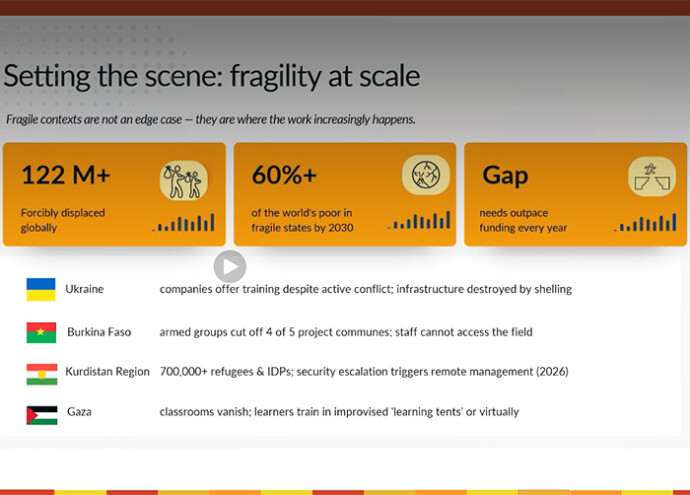
Fragility is on the rise. According to the OECD, over 122 million people worldwide are forcibly displaced today. Funding is under pressure, yet the need for reliable, accountable, and context-sensitive delivery has never been greater.
At GFA, we have been working in these environments for decades - not on the side-lines, but as a key contributor. What we have learned is this: Effective work in fragile contexts is not primarily about technical solutions. It is about trust - trust with local partners, communities, and donors. It is about being present when others scale down, and about knowing when to adapt and when to hold course.
This newsletter is an opportunity to share some of that experience - through the voices of our teams, our partners, and the people we work with. You will hear from colleagues working on social protection in Nigeria, economic recovery in Burkina Faso, and fund management in contexts where fiduciary assurance is as important as programmatic quality. You will also hear from partners who have chosen to work with GFA and what that experience has meant for them.
We do not claim to have all the answers. Fragile contexts, by their nature, resist simple formulas. But we believe that honest reflection, strong local relationships, and a commitment to long-term presence are the foundation on which sustainable change is built - even in the most difficult circumstances.
We wish you an exciting and inspiring read.
“It’s not a framework. It’s about speaking all three languages”
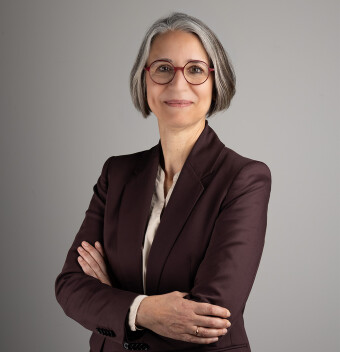
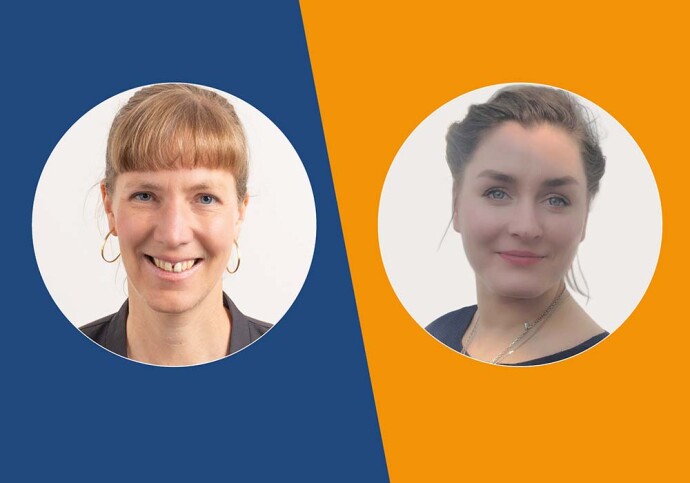
GFA experts Maren Kröger and Yulia Titova on what it really takes to deliver results in fragile contexts.
Maren Kröger is a Senior Consultant in GFA’s Private Sector, Skills and Employment department, with experience spanning GIZ, UNHCR, and over a decade of project work in conflict-affected settings. Yulia Titova is a Senior Consultant in the Water and Waste Management department and a specialist in fragile context programming. Together, they have shaped GFA’s thinking on what it means to work at the humanitarian-development-peace nexus – and what distinguishes organisations that do it well from those that do not.
Fragile contexts, the nexus, the humanitarian-development divide – these terms get used a lot. What do they actually mean in practice?
Maren Kröger: The core issue is that humanitarian actors, development practitioners, and peacebuilding specialists each operate with different mandates, different timelines, and different institutional cultures – and in fragile contexts, all three settings are happening at the same time. The humanitarian system is built for speed: distributing essential supplies, managing immediate protection risks, reaching people fast. Development organisations are built for long-term planning: frameworks, indicators, institutional partnerships. Neither is wrong – but when they don’t coordinate, their interventions can actually undermine each other.
I saw this at first hand during my time at UNHCR, working on a joint programme with GIZ on skills development for displaced persons. GIZ came in with all the tools of development cooperation – logical frameworks, multi-year indicators, stakeholder workshops. My UNHCR colleagues simply weren’t in a position to engage with that framing. Their bandwidth was elsewhere. It wasn’t a failure on either side – it was a collision of two very different systems. What we’ve tried to do since is build a bridge between them.
Yulia Titova: The nexus isn’t really a concept – it’s a description of reality. In the places we work, you can’t cleanly separate emergency response from development from peacebuilding. What matters is having someone who understands all three languages and can translate between them. That’s an added value we provide.
What does GFA do differently in these settings compared to other organisations?
Yulia Titova: Four things, concretely. First of all, we stay present safely. Most firms pull out when things get difficult, or they stay and expose their people to unacceptable risk. GFA designs every project with multiple scenarios – if access drops, we have a fallback. If the security situation deteriorates, we switch to remote monitoring. In eastern DRC, one of our programmes survived a rebel attack on its headquarters. The team moved to remote management and kept delivering. That’s 17 years of continuous implementation in one of the most volatile regions.
Second, we work with people who are genuinely embedded locally – not subcontractors, but partners who can tell you the road to a district is about to be blocked three days before it happens. In Burkina Faso, our team leader personally negotiated access with community leaders to get starter kits through by convoy. That is not something you can manage from Hamburg.
Third, we move fast while maintaining compliance. Donors want speed, but they also need audit trails – and in fragile contexts those two things are in constant tension. Our fiduciary work in Mali, overseeing Global Fund grants and verifying every disbursement in a security environment that changes weekly, is one example. Our public finance management assignment in the DRC is another. We hold the compliance architecture together even when everything around it is unstable.
And fourth, what I call our secret weapon, is translating between silos. We sit in the middle between humanitarian-development systems and make sure that short-term operational decisions don’t erode long-term institutional work. That’s what the nexus means in practice – not a framework, but someone in the room who speaks all three languages.
"The OECD counts over 122 million forcibly displaced people globally – a number that continues to grow. Fragile contexts are not an edge case. They are, increasingly, the work.”
Maren Kröger
You mentioned staying present safely. How does GFA actually manage security in high-risk environments?
Maren Kröger: Security management is what makes everything else possible. GFA has a dedicated security architecture: hostile environment training, First Aid designed for conflict settings, crisis simulations to test our emergency procedures, and an internal system aligned with the ISO 31030 standard. But the infrastructure can only take you so far. In the end, experience and judgement are irreplaceable.
One of our colleagues was in Erbil, Kurdistan, at a moment when a regional escalation looked increasingly likely. The open-source intelligence was ambiguous. She trusted her instinct, boarded a plane, and left. The next day she would not have been able to do so, and the colleagues who stayed had to be evacuated overland to Turkey. No system tells you to do that. That decision comes from experience. We invest heavily in building that kind of judgement in our teams.
What does this look like in terms of actual project delivery – when things go wrong on the ground?
Yulia Titova: The honest answer has to be: We already planned for it. Scenario-based work plans, deputy arrangements, secured digital documentation are implemented, so that if someone has to leave overnight, the institutional memory doesn’t leave with them. Remote monitoring and verification processes that meet auditor requirements – not WhatsApp photos, but structured mechanisms.
Maren Kröger: And we also have to be honest about where the risks lie for the people we work with. In a project in West Cameroon, we were supporting women survivors of sexual violence to build economic independence. The intervention was right – but greater female economic autonomy can increase the risk of domestic violence in certain contexts. We built in a referral system connecting our trainers to gender-based violence response organisations in the area. That didn’t cost money. It cost research and follow-up. But it meant that if something arose, people knew exactly what to do.
That’s what responsible delivery in fragile contexts looks like. It’s not just about keeping the programme running. It’s about making sure that in doing so, you’re not creating new risks for the people you’re there to support.
Building systems where others deliver programmes in Nigeria
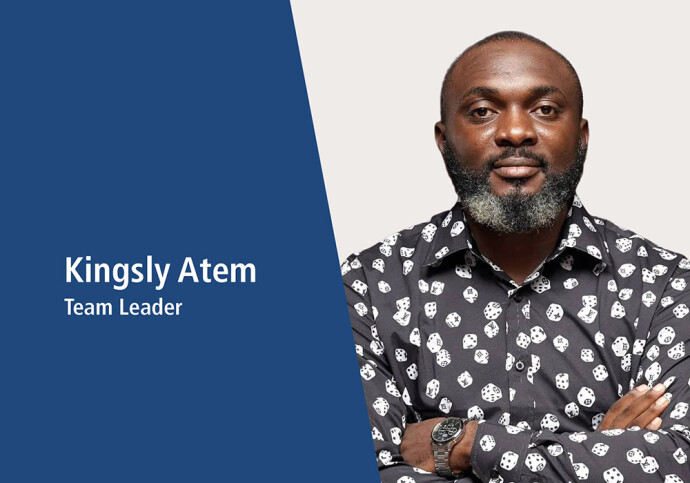
When Kingsly Atem decided to leave the NGO sector after more than a decade, he was not looking for a change of scenery. He was looking for a different kind of work. “What I really wanted was to shape systems, not just deliver programmes,” he explains. “To work at the intersection of humanitarian response, development, and peace – but with greater technical rigour, and with a real focus on policy influence.” This ambition brought him to GFA, and to one of the company’s most complex assignments to date: Team Leader of SEPIN, a shock-responsive social protection and graduation programme reaching 6,000 households across Borno and Adamawa States in Northeast Nigeria. A year later, he says the move has delivered on its promise – and then some.
A different culture of decision-making
For Atem, the most significant shift has been cultural. In the NGO world, he explains, the emphasis is on compliance: following SOPs, working through layers of approval, adhering to a predefined log frame. “Which is right – compliance matters. But it can slow you down.” In consulting, the orientation is different. “Consulting is about diagnosis. You collect data, you structure the problem, you design a solution – and you do it fast, because the context demands it.”
At SEPIN, speed was not a luxury. In the project’s early phase, the team was expected to commit and disburse 1.2 million EUR within six months – while simultaneously designing the programme, conducting a market and conflict sensitivity analysis, and setting up implementation structures across two of Nigeria’s most insecure states. Halima Abdi, GFA Senior Consultant and project backstopper, recalls how the team had to move into implementation while still completing inception phase steps – looping between processes rather than following a linear path. “In a strictly linear NGO environment, that would have been very difficult,” she notes. “For us, it was necessary, and it worked.”
What made it work, Abdi and Atem agree, was a culture of trust and autonomy. “Halima trusts me to make analytical decisions, to manage the client, to keep the team on track,” says Atem. “There was a period when we didn’t have all the pieces in place. But I kept things going. That ownership is something I really value.”
Designed for fragility
SEPIN operates in Borno and Adamawa – two states where conflict, displacement, and flooding have compounded for years. The project’s design reflects that reality from the outset. Before any activity began, the team conducted a thorough context analysis covering security dynamics, political economy, conflict sensitivity, and gender issues. This resulted in a programme architecture built for adaptation – flexible enough to shift as conditions changed, but grounded in close coordination with GIZ, government systems, the Cash Working Group, and market actors.
That flexibility has been tested repeatedly. In Diyarawa, where the graduation programme operates, recurring conflict between two communities has periodically blocked access. When the team could not enter, the community coaches – forty men and women recruited from the communities themselves – kept things going. They continued meeting with participants, maintaining the coaching rhythm, until the situation stabilised and the team could return. “The model is designed so that even when access is challenging, implementation does not stop,” states Atem.
What 150 euros can do
On the shock-responsive social protection side, SEPIN completed a one-time cash transfer of 150 EUR to 5,000 households across eight local government areas in Adamawa and Borno to cushion the impact of flooding and displacement. Fifty per cent was paid out to women, including IDPs, returnees, persons with disability, and youth. Crucially, Atem insisted on retaining a reserve of 500 households for unforeseen shocks. That decision has already paid off – new displacements caused by ongoing conflict have brought new families into crisis, and the reserve has allowed the project to respond without redesign.
On the graduation side, 1,000 households are engaged in a longer-term programme combining conditional cash support, skills training tailored to local market conditions, and financial inclusion through Village Savings and Loan Associations. A monthly cash support of 30 EUR per household provides a consumption floor while participants build their businesses.
The coaches at the centre
At the heart of SEPIN’s delivery model are its forty community coaches. Selected through a rigorous process from an initial pool of 55 candidates, they are embedded in the communities where participants live. They meet with participants bi-weekly, facilitate literacy and math sessions, cover topics from gender and women’s leadership to nutrition and climate-related behaviour, and serve as the project’s eyes and ears on the ground. They are trained, shadowed weekly by supervisors, and supported with communication credit to stay in contact with participants between visits. Every six months, strong performance is recognised with a bonus.
The coaches are the frontline. They spend more time with participants than we do. We invest in them accordingly.
Kingsly Atem
“The coaches are the frontline,” says Atem. “They spend more time with participants than we do. We invest in them accordingly.” Halima Abdi describes the broader ecosystem: six local supervisors across both states, two monitoring and data collection officers, and a core technical team of six specialists – all working to support and quality-assure what the coaches do. “It is not just coaches,” she explains. “It is an entire system built around them.”
From delivery to policy
Perhaps the most striking dimension of SEPIN is where its reach extends beyond the communities it serves. A recent learning event – bringing together state ministries, federal representatives, NGOs including Caritas and WFP, and the EU as donor – drew on the project’s experience with cash disbursement, graduation design, and adaptive management to generate lessons for the broader system. Those lessons are now feeding into policy discussions at state level.
For Atem, this is exactly what he came for. “I wanted to influence systems, not just implement,” he says. “The fact that a cash delivery project is already generating policy-level thinking – that is what this kind of work can do when it is designed well.”
ECONOMIC RECOVERY IN BURKINA FASO’S CHALLENGING ZONES
Five municipalities. One access point. And yet: results across all of them. This is, in a few words, the operational reality of PDICA – a project supporting economic recovery for internally displaced persons and host communities in Burkina Faso’s Koulé region. Commissioned by GIZ and co-financed by the European Union, the project implemented by GFA works in five municipalities where insecurity has driven mass displacement and where the vast majority of development organisations are no longer present.
Designing for the inaccessible
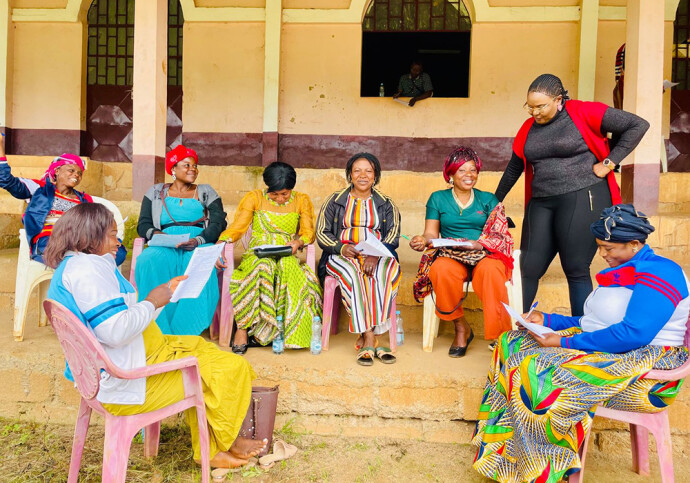
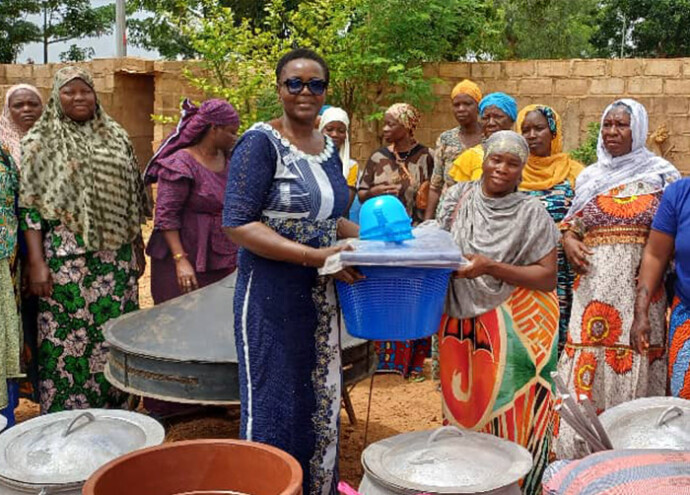
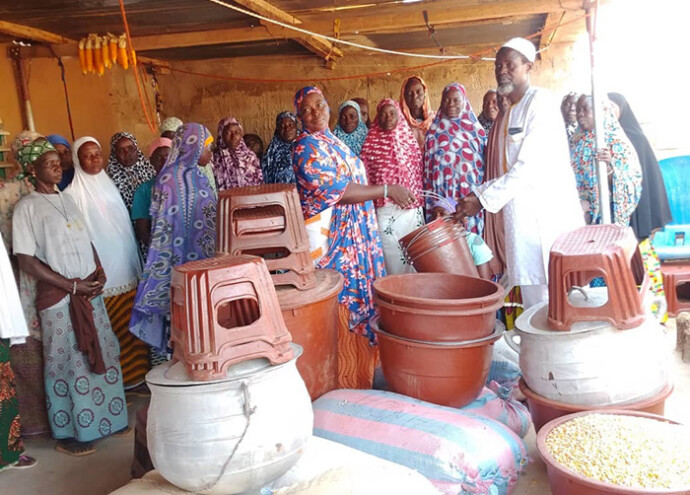
Only one municipality, Kongoussi, can be visited physically by the GFA project team while the others – Bourzanga, Bouroum, Dablo, and Yalgo – have to be reached by other means. Under these circumstances, the question is not whether to work – it is how. Team Leader Nathalie Kuela and her colleagues have built an implementation model that functions within these constraints. Local partner organisations – NGOs and community associations already embedded in each commune – conduct the training and follow-up on the ground. Partners travel to Kaya, the nearest accessible city, for coordination meetings with the GFA team. WhatsApp groups connect the project with local authorities, community representatives, and technical partners across all five communes, enabling real-time communication, monitoring updates, and rapid problem-solving. Starter kits – the essential materials that allow trained women and young people to launch or strengthen their income-generating activities – are delivered by convoy to communities that cannot be reached by road under normal conditions.
The approach combines remote implementation using digital tools where possible with modular flexibility to deploy activities in safer zones when access is restricted. In practice, this means close coordination with local authorities, constant security monitoring through GIZ systems and a GFA security provider, and a culture of adaptation that treats each week as potentially different from the last.
What very little can do
The results speak for themselves. Across five communes, over 491 cooperative members have received practical training and support. The majority of them are women, including both internally displaced persons (IDPs) and members of host communities. Every participant surveyed reported having launched their activity after training, with no failures recorded, typically within three months of completing the course. Through the local grant approach, a further 300 beneficiaries (210 IDPs and 90 host community members) have been supported across the same communes, extending the project’s reach still further. To date, a total of 706 starter kits have been distributed, 400 for individuals and 306 for small groups to support producers and young entrepreneurs.
The project’s logic is deliberately focused: targeted training in specific income-generating and employment-creating skills, a starter kit to get going, and rigorous follow-up. Each commune has its own specialisation, reflecting local market conditions and available trainers:
In Kongoussi, 62 women have been trained in soumbala production and soap-making.
In Bouroum, the focus for 17 women is poultry farming.
In Yalgo, 72 women work in soap-making, rice processing, and soumbala.
In Bourzanga, 40 women working couscous and cowpea processing.
Across all activity types – soap and detergent production, cereal processing, poultry farming, cattle fattening, catering – the approach is the same for a total of 191 women trained: specific, practical, and followed through.
Beyond the cooperatives, the project has also supported women and men – displaced and host community members – in entrepreneurship. For example, 100 young entrepreneurs were trained in business management and financial literacy, individual business plans, and internship placements, and 15 MSME managers were supported with training in entrepreneurship, business management, and digital marketing. In addition, 30 producers were trained in good agricultural practices, specifically sesame production. Despite serious security challenges and disrupted access to quality agricultural inputs, 70 producers improved their incomes and contributed to the local availability of quality seeds.
The income figures are modest in absolute terms, but what they represent in the lives of the women involved is anything but. Women in Bourzanga involved in cereal processing generate between 9-19 euros per production cycle. In Kongoussi, soumbala groups generate collectively between 76-104 euros per cycle. In a context where many households have no reliable income at all, these amounts are transformative.
For women who arrived displaced and without means, this income is often the first they have controlled independently – and they put it to work. Some reinvest directly into their activity, buying additional materials or stock to grow what they have built. Others use it to pay school fees, cover medical costs, or purchase household essentials. Some buy small livestock – a chicken, a small flock – as a further income source and a hedge against uncertainty, clothing for the children, contributions to community life: a wedding, a funeral, the shared obligations that hold a social fabric together even in displacement. In communities where so much has been taken away, the ability to contribute – to one’s family, to one’s neighbours – is itself a form of recovery.
Where others are not
In Burkina Faso, many of the women we support live in communities that are difficult to access. Through GFA’s partnership-driven approach, we work hand in hand with local organisations to ensure the PDICA project reaches those who are often left behind. This is how we build trust, create impact, and strengthen resilience where it is needed most.
Nathalie Kuela
This is the core of what PDICA represents as a model: a delivery system built for the places where delivery is hardest. The combination of trusted local partners, flexible logistics, digital monitoring, and targeted interventions shows that with the right architecture, impact is achievable even where access is not. In a region where external support has evolved over time, the GFA project team continues to accompany local initiatives despite the fragile context. Through this sustained support, women across all five communes are strengthening their activities, generating income and building their autonomy.
The work of GFA’s Public Financial Management (PFM) department is inherently tied to government systems — which rarely stop functioning more visibly than in fragile or crisis-affected environments. The PFM team has built up hard-won experience operating in some of the most challenging settings in the world: Sudan, Mali, the Democratic Republic of Congo, Nigeria, Chad, and beyond.
Anticipating risk before it becomes a crisis
The cornerstone of GFA's approach in fragile contexts is anticipation. Rather than reacting to security incidents, the team develops scenario analyses well in advance — mapping out what a deteriorating situation could look like, what triggers would prompt specific responses, and what steps would be taken at each stage. When elections approach, GFA closely monitors campaign dynamics and security incidents and calibrates activities accordingly.
This approach has been tested repeatedly in practice. Between 2024 and 2025, PFM developed scenario plans for elections in Chad, Liberia, and the DRC, calibrating mitigation measures to the level of risk identified. This ranged from active monitoring and pre-arranged evacuation triggers to, in the case of the DRC, the temporary relocation of international experts. In each instance, donors and national counterparts were informed in advance, with business continuity plans in place to ensure oversight and approvals continued without interruption.
Remote management without losing control
A key enabler of GFA's resilience is the digital infrastructure it has built for remote oversight. Transaction review platforms, cloud-based document storage, and structured advance disbursement systems with mandatory reconciliation allow the team to maintain rigorous fiduciary control even when physical presence is restricted. In practice, this means that even if international staff need to relocate, the flow of documents, approvals, and financial controls continues — with a national focal point on the ground providing operational continuity and regular security updates.
This approach also shapes how GFA works with implementing partners and ministries in difficult areas. Rather than placing staff in high-risk zones, the team works through advance disbursements to local entities, collects and verifies supporting documentation remotely, and uses digital audit trails to meet donor compliance requirements. In Sudan, this model has allowed GFA to maintain financial oversight remotely throughout the crisis, keeping fiduciary minimum control and donor compliance even where a permanent field presence was not possible.
Local perspective, sharper decisions
Scenario planning is only as good as the information feeding it. GFA has increasingly embedded local security advisors into its project setups in countries like Mali and Nigeria. These specialists provide real-time, granular context that project staff, no matter how experienced, cannot replicate. Early warning signals, understanding of local political dynamics, and network-based intelligence make the difference between over-reaction and well-calibrated decision-making.
Mali offers a good illustration of why this matters: In a fast-moving and complex situation, local sources and analysis provide the grounding needed to read events accurately and respond proportionately. This need for grounded judgment is why GFA PFM has embedded up-front security expertise as a integral element of project design in fragile settings.
Communication that keeps donors and counterparts on board
Perhaps the most underrated element of GFA's approach is communication with stakeholders under pressure. Donors like Gavi and the Global Fund – who themselves do not maintain offices in the country – respond well to transparent, early communication that explains the situation clearly, describes the mitigation measures in place, and provides confidence that activities will continue. When GFA triggered its temporary relocation plan in Mali and DRC, donors were not surprised: They had been kept informed throughout, and the business continuity arrangements had already been made.
Just as important is close, ongoing communication with national counterparts. Decisions are explained clearly so they are understood and supported on the ground, while national partners are kept reassured of GFA's continued presence and commitment throughout any period of adjustment.
Fragility as a field of expertise, not a barrier
PFM work is, by nature, concentrated in environments where financial systems require support and oversight is most needed. Hence, fragile contexts are not the exception for GFA's PFM team – they are the norm. The tools, habits, and relationships that GFA has developed are not emergency measures. They are embedded in how the team designs and implements every project – from Mali and DRC to Liberia and Belize – where natural disaster risks require the same advance planning and scenario thinking as conflict or political instability.
The result is a team that can stay operational when others cannot, deliver credibly to major donors in some of the world's most difficult settings, and ensure that public funds reach their intended purpose – regardless of what happens around them.
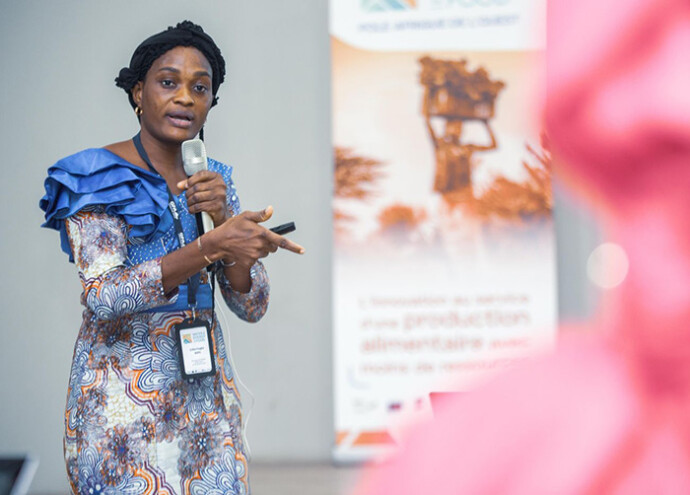
In July 2026, GFA Senior Consultant Maren Kröger delivered the opening keynote at the BarCamp “Vocational Skills Development in Crisis and Fragility” of the Donor Committee for dual Vocational Education and Training (DC dVET), a knowledge hub for expertise, experience, and trends in dual VET in development cooperation. The event brought together practitioners from across the globe to discuss what vocational skills development can realistically achieve in contexts marked by conflict, displacement, and institutional uncertainty.
Maren Kröger drew on GFA's project experience in Iraq, Burkina Faso, and Cameroon to offer a frank assessment of where dual and dualized VET approaches work – and where they require significant adaptation. A recorded field input from a GFA expert working in the GIZ project Employment Prospects for Socio-economic Integration of Refugees, IDPs and Host Communities in the Kurdistan Region of Iraq added a direct practitioner perspective from the ground.
Other BarCamp featured contributions from Gaza, Ukraine, Ethiopia, Lebanon, and Senegal, with organisations including GIZ, ILO, UNHCR, Swisscontact, and UNRWA. Breakout sessions explored how training can remain relevant in volatile labour markets, what 'dual' looks like when private sector partners are absent or informal, and how skills development can contribute to resilience beyond employability.