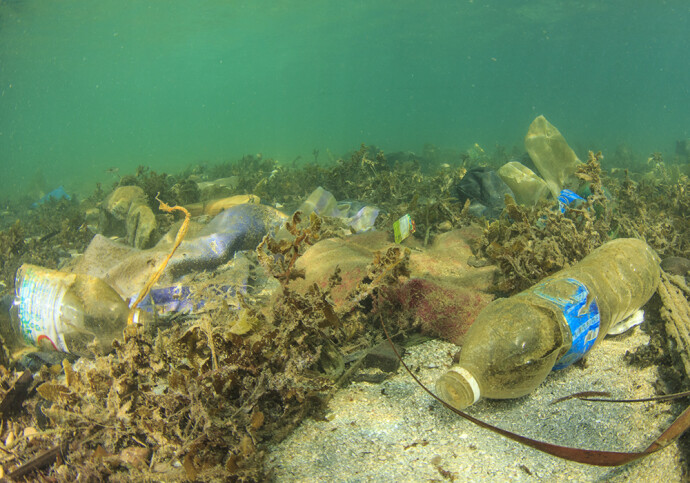
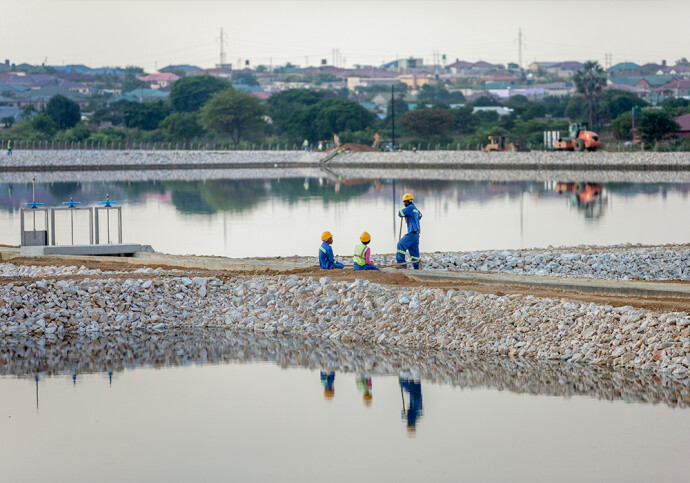
Across climate governance, carbon has become the major and most visible indicator for setting targets, on dashboards, and as milestones for net-zero pathways. But next to carbon there are other relevant variables causing disruption. Often enough disruption arrives through water. Floods, droughts, and pollution shocks don’t show up as missed targets; they show up as outages, boil-water notices, and damaged infrastructure. UNDRR estimates that around 90% of disasters are water-related: too much, too little, or water made unsafe.
Water utilities feel this first: Droughts interrupt supply. Floods overwhelm infrastructure. And too often, floods are intensified by clogged drainage and mismanaged waste streams that were never designed to carry today’s volumes. In many systems, 40–50% losses Non-Revenue Water (NRW) mean utilities are already operating on a thin margin of water, revenue, and trust before the next shock hits.
At COP30 in Belém, adaptation and resilience again moved up the agenda. For utilities, this is not abstract diplomacy but focussing on risk-based decision making. It is about operational continuity: keeping water and sanitation running, protecting public health, and recovering quickly when the weather turns.
Our Water, Sanitation, and Waste Management (WSWM) team works with utilities and ministries across Africa and other water-stressed, fragile contexts to make water and waste risk visible in core decisions. This includes reporting by catchment, tracing how waste practices influence hydrological stress, prioritising hotspots, and aligning capex and O&M with real physical exposure, not just emissions curves.
In this newsletter we want to show what it looks like when governance meets operational reality: operational lessons from Jordan’s wastewater reuse; a World Water Week exchange on negotiating climate finance without pricing households out; third-party monitoring on Socotra when access is constrained; and practical tools to support Plastics Treaty implementation. The accountability test can be quite simple: who owns water-and-waste risk decisions across institutions (utilities, municipalities, basin actors, waste authorities), and how are those responsibilities tracked, funded, and reviewed year to year in plans, budgets, and performance reporting?
We wish all our partners and readers a happy New Year and look forward to continuing our shared work towards resilient, equitable, and sustainable water and waste systems.
Water – connecting climate, economic, social, and governance issues
Water is at the heart of today’s development challenges. It shapes how cities grow, how utilities operate, how communities cope with climate shocks, and how institutions plan for the future. One lesson GFA has learned from working in so many countries is this: if we want water systems to be resilient, equitable, and accountable, we must start where impacts are felt first – in the services people depend on every day.
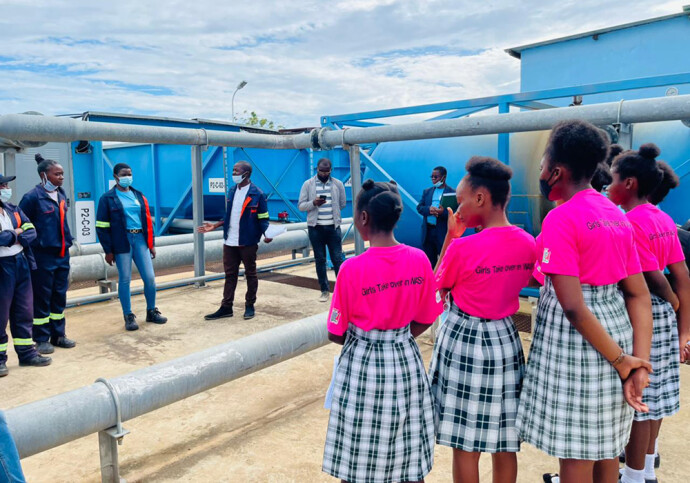
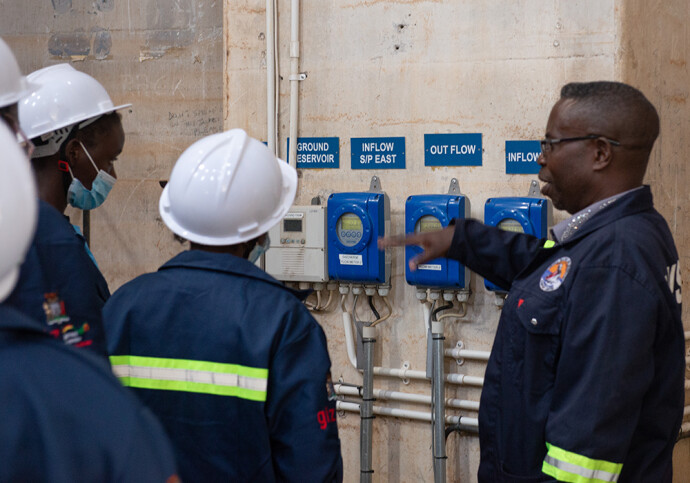
Climate change is a reality that is impossible to ignore. More than 90% of disasters are water-related (UNDRR, 2024), and utilities feel these shocks first: demand rises as supplies shrink, while infrastructure is stressed by floods and prolonged droughts. In 2024, Zambia’s El Niño-driven drought showed how quickly climate risk becomes an operational and economic crisis. It affected over nine million people across most districts and pushed millions towards crisis-level hunger, while low hydropower levels drove load shedding of up to around 21 hours per day, reducing pumping hours and service reliability. This is exactly why, through GFA’s support to Zambia’s utilities under GIZ’s Nexus Energy and Water Programme for Zambia (NEWZA), we focus on resilience as a systems capability: strengthening institutions, operations, and financial robustness so that the next drought or flood does not automatically become a service collapse.
However, water’s importance goes far beyond climate adaptation. Utilities demonstrate that water can drive circularity and innovation. When leaks are reduced, operations optimised, and wastewater reused, systems become cleaner, more efficient, and more financially stable. Some utilities that combine leakage reduction with energy efficiency have achieved full cost recovery within three years (IWA Case Studies, 2022). Against this backdrop, GFA is actively supporting Jordan’s largest water utility to reduce non-revenue water – a critical intervention in one of the world’s most water-stressed countries. Beyond Jordan, progressive operators are turning treatment plants into resource-recovery hubs that capture biogas, reclaim water, and recover nutrients, reducing operating costs while also lowering emissions (UNEP, 2022). Circular thinking is no longer theoretical; it is already improving service delivery.
Water also has a social and political dimension that should not be underestimated. When services are unfair, unreliable, or opaque, frustration grows. But when communities are engaged and decisions are transparent, water becomes a unifying element rather than a source of conflict. Evidence shows that inclusive water management strengthens social cohesion and trust (UNICEF, 2021). Across fragile regions, community-led water committees have helped defuse tensions by bringing different groups together around shared infrastructure and decision-making. This was central to GFA-implemented work in rural areas and refugee settlements in Northern Uganda. A functioning water committee, a transparent tariff consultation, or a participatory planning process may seem minor; yet these are often early building blocks of broader local stability.
Achieving success along these lines requires governance commensurate with the complexity of the challenge. The days when utilities could operate as purely technical organisations are over. Today’s service providers must integrate climate risk into planning, communicate clearly with customers, and balance affordability with long-term financial stability. GFA’s work in Albania illustrates this: reforms such as transparent communication, inclusive decision-making, and socially balanced tariffs helped restore trust while strengthening utilities’ financial base. Similar approaches are emerging elsewhere, supported by digital platforms, participatory tools, and stronger accountability mechanisms.
Water is not a sector, it is a system
Across climate resilience, the circular economy, social cohesion, and governance, one truth emerges: water does not only mean life. It is also the link between people, institutions, and ecosystems. This edition of the GFA Newsletter explores how our partners and projects are working within this interconnected landscape. Whether through climate finance readiness, utility transformation, or community engagement, the message is clear: water is not just a sector, but a system. Strengthening it remains one of the most promising ways to build resilient, inclusive, and sustainable societies.
Inside Jordan’s wastewater reuse system – voices from the field
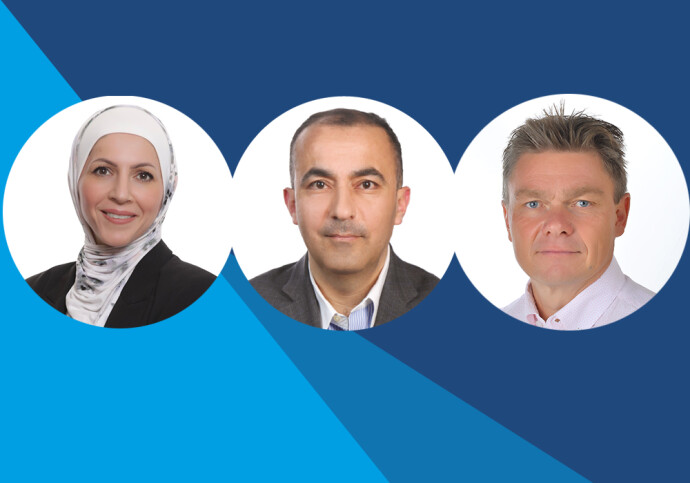
From left to right: Salam Almoman, Eng. Mohammad Al-Dwairi, Dirk Winkler
As part of the
World Toilet Day initiative on 19 November
, GFA’s Water, Sanitation and Waste Management Department set out to better understand the current dynamics of wastewater reuse in Jordan. Batool Kherfan spoke with three experts to inform this effort with practical expertise: Salam Almomany (GIZ Jordan), Eng. Mohammad Al-Dwairi (Ministry of Water and Irrigation), and Dirk Winkler (GIZ Water and Energy Cluster). In parallel, these insights were reviewed through an internal GFA expert lens, represented by Jim Gibson (GFA), to critically assess evidence, assumptions, and operational implications.
Jordan is often cited as a global frontrunner in wastewater reuse. More than 90% of treated wastewater is reused, largely in agriculture. Annual volumes are estimated at 170–180 million cubic metres, supplying around 15% of Jordan’s total water availability (Jordan Water Strategy 2023–2040). Seasonal patterns continue to shape distribution: demand drops in winter, creating temporary surpluses, while collection and treatment limitations constrain availability during peak agricultural months. Farmers increasingly request treated wastewater, particularly for nutrient-intensive crops, where nutrient-rich effluent reduces fertiliser costs, in some cases by up to 60% per hectare.
Beyond the strong farmer demand highlighted by external experts, key challenges remain structural. The growing scale and complexity of treatment plants increase the need for advanced operational models. Policy-level insights point to private sector participation as one pathway to improve efficiency, strengthen maintenance routines, and introduce performance-based management practices that public utilities struggle to implement on their own.
Operational constraints persist, as stated by Almomany and Winkler. Ageing equipment, underperforming aeration and disinfection systems, and gaps in technical capacity affect reliability. While donor support has strengthened infrastructure, limited funding for routine operation and maintenance leads to variable treatment quality and compliance risks. Gibson stressed that “capacity gaps” often mask specific operational failures, such as insufficient process control during peak inflows, delayed maintenance of aeration equipment, or limited operator ability to adjust treatment parameters under variable loads.
Regulation adds another layer of complexity
National standards define permitted crops and quality thresholds but also limit reuse options. Effective coordination between the Ministry of Water and Irrigation, the Water Authority of Jordan, and service providers is essential. From a GFA perspective, Gibson stressed that standards alone are insufficient without consistent enforcement, clear testing responsibilities, and regular inspections.
Social acceptance within Jordan is generally high, but export markets, particularly in the Gulf, remain hesitant. Winkler noted that buyers often prefer products not irrigated with treated wastewater, even when testing confirms safety, thereby reducing market opportunities for farmers. Gibson pointed out the need for evidence-based analysis that distinguishes between farmer practices, buyer perceptions, and how information on irrigation sources is communicated and verified.
Tariffs emerged as another critical issue, as current tariffs recover only around three-quarters of operational costs, leaving utilities structurally underfunded. Winkler emphasised the importance of granting utilities greater autonomy to set tariffs that reflect actual electricity costs, treatment requirements, and local conditions. Al-Dwairi agreed but stressed that tariff adjustments remain politically sensitive due to national commitments to affordability and support for the agricultural sector. From a GFA perspective, chronic underfunding of operations and maintenance directly undermines performance, regardless of how advanced infrastructure may appear on paper.
Jordan’s experience illustrates both the potential and complexity of wastewater reuse in water-scarce contexts. It reflects many of the success factors that characterise GFA’s approach across the water sector: strengthening institutions, improving operations, and supporting utilities as they build resilient and financially sustainable systems. Through continued cooperation with national partners, GFA regularly convenes and contributes to cross-institutional dialogue, translating strategic insights into practical improvements that strengthen water security, agricultural productivity, and long-term resilience to economic and climate risks.
In fragile and conflict-affected contexts, development work often depends on seeing without being present. Nowhere is this more evident than in Yemen, where international access to project sites has been severely constrained for over a decade. Against this backdrop, third-party monitoring (TPM) has become an essential bridge between donors, implementing partners, and communities. TPM means hiring an independent organisation to collect and verify data about projects, providing unbiased oversight.
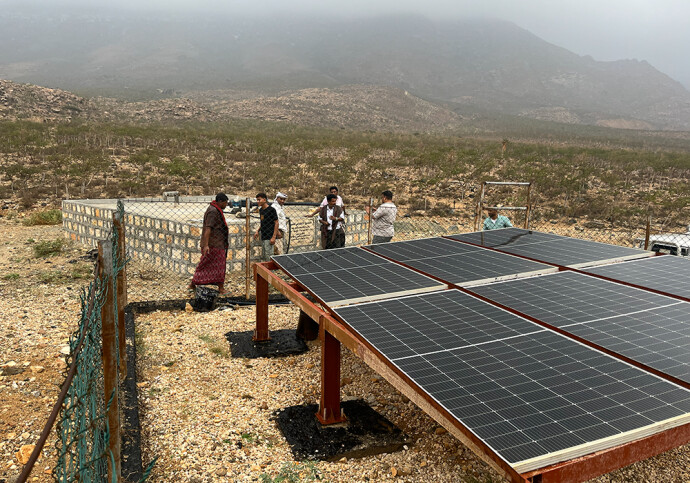
In December 2025, GFA’s TPM team convened its annual team meeting on Socotra Island as part of the KfW-financed Technical Audit and Technical Third-Party Monitoring assignment 2025 - 2027 for Yemen. The project supports the Social Fund for Development (SFD), a long-standing partner of KfW, in overseeing development interventions funded by the German Federal Ministry for Economic Cooperation and Development (BMZ). Since 2014, international KfW staff have been unable to access project sites directly so that reliable, independent monitoring is carried out remotely by third parties.
Often described as Yemen’s “forgotten island”, Socotra is better known for its exceptional biodiversity than for the operational realities of development work. For the TPM team, however, the island offered something equally valuable: the opportunity to work side by side with local colleagues, assess projects in person, and reflect collectively on monitoring practices in a complex environment.
Over the course of a week, the team reviewed five projects, combining technical assessments with interviews with beneficiaries and key stakeholders. One focus was the expansion of the water supply system in Hadibo that is designed to improve access for surrounding settlements. Discussions with households and the local Water and Sanitation Corporation highlighted both tangible improvements and the persistent challenges of operating infrastructure in a remote, resource-constrained setting. Prior to the intervention, households depended largely on private water tankers, paying up to 20,000 YER per cubic metre. Today, residents receive piped water twice a week, throughout the day. The openness with which community members welcomed the team into their homes was a reminder that trust remains central to effective monitoring.
Further north-east, the team visited an ongoing Labour-Intensive Works Programme supporting the construction of pedestrian stairs to Hoq Cave. While modest in scale, the intervention illustrates how small infrastructure investments can enhance access, safety, and local economic opportunities. Observing the works on site – and the associated visitor facilities under development – allowed the team to assess not only progress but also longer-term sustainability considerations.
In the western part of the island, near Qalansiya and Abd Al Kuri, monitoring activities focused on rainwater harvesting tanks and the rehabilitation of home gardens. These projects aim at strengthening water access, food security, and livelihoods, particularly for women. Visits to cultivated plots where fruits and vegetables are grown underscored how targeted, low-cost interventions can have a direct impact on nutrition and household resilience.
Beyond the projects themselves, Socotra’s geography shaped how monitoring was carried out. With limited infrastructure and long distances between sites, the team camped near field locations, reducing travel time and enabling closer engagement with communities. Set against landscapes ranging from the Dixam highlands to the island’s coastal dunes, the experience reinforced the importance of adapting monitoring approaches to local realities.
For GFA, the Socotra meeting was more than a field visit. It was a reminder that effective TPM is not only about compliance and reporting, but about interpretation, dialogue, and contextual understanding. In environments where access is restricted and uncertainty is the norm, credible monitoring depends on strong local partnerships, methodological rigour, and the ability to connect evidence from the field with decision-making at a distance.
The UN plastics treaty negotiations remain unresolved while countries must already prepare for implementation. The next phase requires stronger national systems, financing, and technical guidance. How can development cooperation support this process?
Negotiations at a turning point
UNEP’s Intergovernmental Negotiating Committee on Plastic Pollution (INC) met for its fifth resumed session in Geneva in August 2025. Delegations hoped to finalise the treaty on a comprehensive approach that addresses the full life cycle of plastic, including its production, design, and disposal, but the meeting closed without consensus. Positions remained divided on upstream controls, the scope of the life-cycle approach, and financing arrangements. The INC Secretariat later confirmed that INC will reconvene on 7 February for one day to elect a new chair and agree on next steps.
Participation in Geneva was high, and discussions reflected a shared recognition of urgency. Many member states supported strong measures on product design and chemical controls, while others stressed economic concerns and preferred nationally determined approaches. As a result, debates were detailed but convergence remained limited on the treaty’s core articles.
Core issues shaping the process
There are three issues which continue to define the negotiations. First, upstream measures remain contested. Some countries advocate binding controls on plastics production and chemicals of concern, while others favour more flexible options. Second, delegates are divided on the extent of the life-cycle approach. Some see the treaty’s focus as primarily downstream, while others insist that upstream and midstream interventions are essential. Third, financing and capacity-building require further clarity. Many countries in the Global South stressed that implementation will not succeed without predictable support and accessible technical assistance. These unresolved questions will influence both the pace of negotiations and the countries’ ability to prepare for implementation.
Perspectives from the negotiation halls
Civil society organisations, technical partners, and youth groups followed the discussions closely. Their engagement offered hands-on insights on how treaty provisions could shape national systems. Shellan Saling from the Youth Coalition for Plastics highlighted a key concern.
The gap between ambition and implementation risks creating an uneven treaty that does not work for everyone. Ambition on paper cannot translate into action on the ground unless every country has the tools to carry it out.”
Shellan Saling, Youth Coalition for Plastics
Her observation echoes a broader concern shared by many participants: Countries most affected by plastic pollution often have the least institutional or financial capacity to respond without targeted support.
From negotiation to action and practical tools
With the next INC session approaching, many countries have already begun preparing for implementation. They recognise that agreement alone is not enough as national institutions will need clear guidance, tools, and practical support to interpret treaty obligations and incorporate them into plans, regulations, and investment decisions.
It is in this context that GIZ, GFA Consulting Group, and RWA Group developed the Plastics Treaty Assist Toolkit, designed to bridge the gap between negotiation outcomes and national readiness. GIZ commissioned GFA and RWA under the global Go Circular programme to prepare the toolkit. Ahead of the treaty’s adoption, it aims at providing partner countries a practical guide for organising national systems that build on long-standing cooperation in waste management and the circular economy across Africa, Asia, and Latin America.
The toolkit responds to priorities raised in regional consultations. Governments expressed the need for a structured resource explaining treaty provisions and helping translate them into national action. The document provides this structure through clear guidance, examples, and tools that practitioners can apply directly.
It is organised into four chapters and ten sections reflecting the life-cycle approach. “The first chapter, Setting the Framework, covers planning, monitoring, financing, and social inclusion. The second, Addressing Plastic Production, focuses on upstream measures and chemicals and polymers of concern. The third, Rethinking Design and Use, addresses product standards, durability, reparability, reuse, and circular product systems. The fourth, End-of-Life Management, covers collection, sorting, recycling, and legacy pollution”.
Each section follows a consistent structure: introduction, suggested measures, examples, and tools. This helps users identify suitable options and apply practical instruments. Five types of measures are presented throughout: regulatory tools, fiscal instruments, collaborative approaches, awareness raising initiatives, and infrastructure or service improvements.
Dr Karima Hamouda, Senior Waste Management Expert at GFA
Training materials and exercises complete the guide, drawing on cases from Ghana, Viet Nam, Colombia, and Indonesia. These resources assist officials to internalise real planning and financing decisions, and support peer learning.
The GIZ, GFA, and RWA toolkit strengthens implementation readiness and provides a common reference for partner countries, supporting the transition from negotiation outcomes to national action and reinforcing cooperation in circular economy and waste sector reform.
Rewriting the playbook: Water utilities negotiating better climate finance
At World Water Week 2025, GFA brought together utilities, funders, and researchers to reimagine how the water sector can access and negotiate climate finance. When climate and water experts gathered at Stockholm World Water Week in August 2025, one session stood out for its audacity in asking a simple but unsettling question: would you take a deal that drought-proofs your city if it adds 6–9% to the average bill over ten years?
The conversation that followed, Rewriting the Playbook: Water Utilities Negotiating Better Climate Finance, was hosted by GFA Consulting Group’s Water, Sanitation and Waste Management Department, led by Yulia Titova, Valentina Bourgue, and Batool Kherfan. Designed as a live podcast, the session brought together voices that are rarely heard in the same room: utility managers facing intensifying climate risks, global funders shaping finance flows, and researchers bridging the two worlds.
Hala Al-Hamawi of GGGI opened the session by stressing that policy and science alone will not deliver resilience unless they are matched by finance. The tools to adapt exist, yet the bridge between ambition and affordability remains fragile. From Kampala to Cape Town, utilities are expected to deliver resilience while keeping water bills politically and socially acceptable. This tension is exacerbated by the fact that many utilities in developing countries recover only 70–80% of their operational costs (World Bank, 2023), leaving little room for resilience-linked tariff adjustments.
Dr Rose Kaggwa from Uganda’s National Water and Sewerage Corporation stressed the importance of integrating climate change considerations into infrastructure design and tariff setting. Siyabulela Bashe of Cape Town’s Water and Sanitation Department reinforced this view, emphasising that resilience is not only a technical challenge but also a financial one, and that affordability must be addressed early to maintain public trust. These perspectives are underscored by the fact that only 5% of global climate finance reaches water adaptation (OECD, 2024), despite evidence that every US dollar invested in resilient infrastructure can generate four US dollars in avoided costs (Global Commission on Adaptation, 2019).
Funders on the panel listened closely. Dr Amgad Elmahdi of the Green Climate Fund highlighted the need to balance bankability with affordability, enabling utilities to access climate finance without pushing households beyond their limits. Najib Bateganya from the Bill & Melinda Gates Foundation pointed to the importance of innovation in how utilities deploy capital and manage risk, noting that while solutions exist, institutions must be ready to absorb and scale them. Yet fewer than 10% of water sector proposals submitted to major climate funds are approved (Green Climate Fund portfolio data, 2024), often due to weak climate rationales or insufficient project preparation.
Why do so many utilities struggle?
Reflecting on why so many utilities struggle to clear that bar, Yulia Titova, GFA Senior Consultant, commented: “Climate finance keeps talking about transformation, but most water utilities in the Global South can’t even get through the door. They’re expected to deliver resilience while operating with thin margins and limited capacity to prepare complex proposals. They don’t need ‘transformational’ buzzwords. They need working pipes and direct support.”
Dr George Wainaina of Eawag reframed the capacity gap by arguing that utilities need a “minimum viable finance office”: a small, dedicated team capable of scanning funding opportunities, shaping proposals, and forming strategic partnerships. This responds to a structural reality in which fewer than 20% of utilities in low- and middle-income countries have internal units dedicated to climate or external finance (UNEP, 2024).
By the end of the GFA-hosted session, the discussion shifted from diagnosis to design. Participants shared concrete steps they would take immediately to become more fundable, such as building a data room to support climate rationales, integrating climate covenants into domestic loans, or using readiness grants to strengthen internal processes before applying for large-scale funding.
What made the session remarkable was not only its content, but also its choreography as a rare exchange between those who approve funding envelopes and those who live with the consequences. The discussion revealed that climate finance is not just about unlocking money, but about negotiating trust, capacity, and timing between partners with different risk horizons.
Much of what was discussed at World Water Week reflects GFA’s work on the ground. GFA’s involvement in the Simiyu Climate Resilience project in Tanzania demonstrates how utilities can translate climate adaptation priorities into viable investment plans. Similarly, the FELICITY II project in Ukraine, implemented under the Eastern Partnership and Central Asia Programme and commissioned by GIZ, shows how strong project preparation can unlock finance for low-carbon, climate-resilient urban infrastructure. Together, these initiatives illustrate that transforming the funding landscape is possible when utilities are equipped with the right tools and supported by the right partners.
For GFA, convening such exchanges is part of a broader mission to help water sector institutions navigate complexity, build resilience, and design systems capable of delivering change at scale. As the world approaches the midpoint of the SDG decade, the playbook for water utilities, and for those who fund them, is indeed being rewritten.